
If a child cannot see well, that child cannot learn, explore, or develop to their fullest potential.
Vision isn’t just eyesight – It’s the gateway to how children understand language, movement, relationships, and the world around them. Nearly 80% of learning in early childhood happens through vision, making eye health one of the most important (and often ignored) parts of a child’s development.
📍 The Bigger Picture: Why Early Detection Is Crucial
Childhood blindness is not rare and unlike adults, blind years in a child result in a much higher lifetime impact, both emotionally and economically.
- 1.02 million children worldwide are blind
- India alone has 2,70,000–3,20,000 blind children
- South Asia accounts for almost half of the world’s burden
The heartbreaking part?
A large percentage of this blindness is preventable or treatable if detected on time.
Delayed screening means delayed treatment and once the brain stops forming visual connections, the recovery window closes.
The Silent Threat: Amblyopia (Lazy Eye)
One of the most common causes of preventable vision loss in children is amblyopia, also known as lazy eye – and it develops early, often without obvious symptoms. A child may appear perfectly normal yet be using only one eye to see, while the brain shuts down the other. Without timely treatment, the vision loss becomes permanent.
Conditions That Require Early Screening
Some children have higher risk and must be evaluated early, especially babies who:
- Were born premature
- Had low birth weight (<2000 gm)
- Needed oxygen or NICU support
- Had birth complications or infections
These babies must undergo Retinopathy of Prematurity (ROP) screening, starting 2–4 weeks after birth depending on gestational age. Missing this window may result in irreversible blindness even before the child learns to crawl.
The Recommended Vision Screening Timeline
| Child’s Age | Who Screens? | What Is Checked? |
| Birth | Pediatrician | Red reflex test |
| 3–6 months | Pediatrician/Nurse | Eye alignment, red reflex |
| 9–12 months | Pediatrician | Fixation & visual response |
| 16–24 months | Ophthalmologist | Dilated examination |
| 3 years | Pediatric Ophthalmologist | Vision testing (child-friendly charts) |
| 5 years & beyond | Ophthalmologist | Full eye test every 2 years |
Common Signs Parents Should Never Ignore
If your child:
- Sits too close to the TV
- Squints or rubs eyes often
- Tilts their head while looking
- Holds books very close
- Shows poor attention span
- Has red, watery, or crossed eyes.
These are early warning signs. Trust your instincts – early checks save sight.
Why Awareness Is Still Low
Despite the evidence, many parents believe: “If my child can see objects around the house, their vision must be fine.” But research shows parents often miss early eye conditions, especially in India due to limited awareness and delayed presentation. By the time a child struggles in school, the opportunity for visual correction may already be fading.
Vision and the Child’s Future
Healthy sight influences:
- 🧩 Brain development
- 🏃 Motor skills
- 💬 Speech and communication
- 📚 Academic performance
- 😊 Confidence & social bonding
A child who sees well learns well and lives well.
How Zamindar Microsurgical Eye Centre Is Making a Difference
At Zamindar Microsurgical Eye Centre, we believe every child deserves the chance to see clearly, learn confidently, and grow fully.
Our Pediatric Eye Care Program includes:
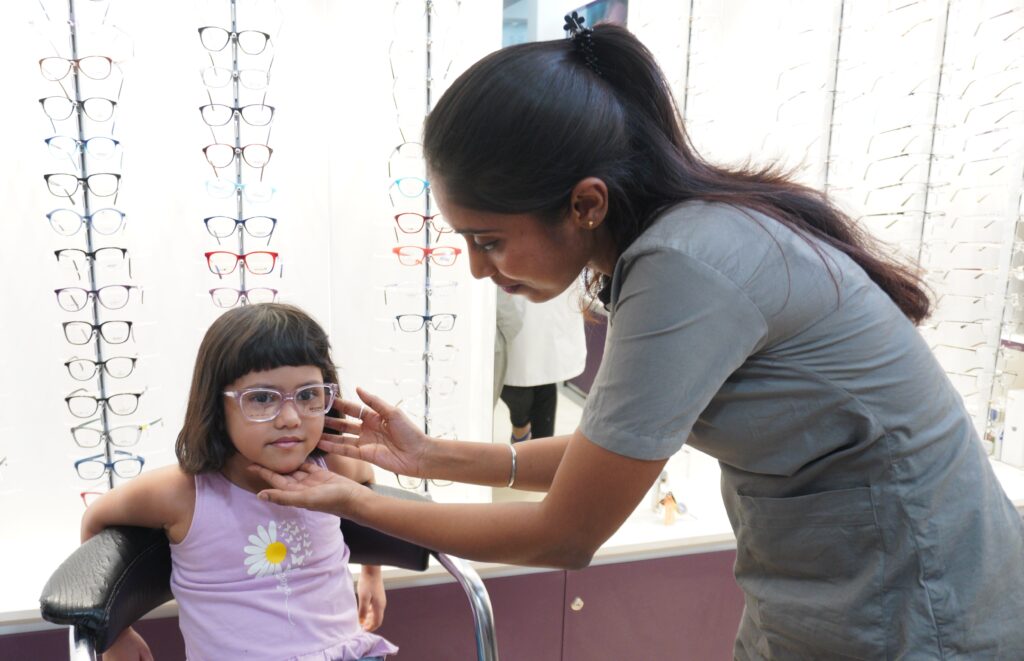
✔️ Child-friendly vision testing
✔️ Screening for newborns, infants & school-goers
✔️ ROP Screening for NICU babies
✔️ Squint & Amblyopia management
✔️ Vision therapy & advanced treatment options
✔️ Digital eye strain assessment (for post-screen exposure era)
With decades of pediatric expertise and a compassionate team, we make your child’s eye checkup stress-free, accurate, and meaningful.
The Best Time for Eye Screening?
👉 NOW.
Because childhood vision loss rarely gives a warning – but screening does.
✨ A clear vision today builds a brighter future tomorrow.